Connect with us

Hi, what are you looking for?

Space Anomalies

New tests cast doubt on ‘impossible’ EmDrive

New tests cast doubt on 'impossible' EmDrive 1

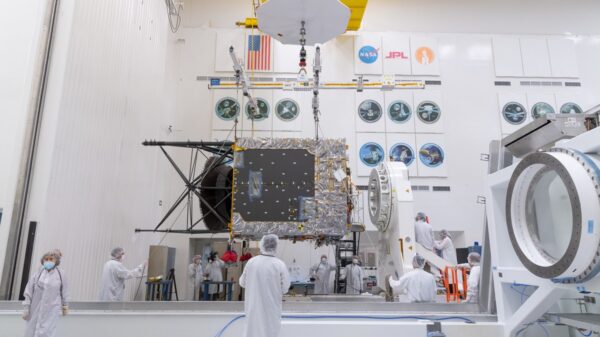
Image Credit: NASA

EmDrive may not be all it’s cracked up to be.

Researchers in Germany may have found an explanation for the thrust produced by the controversial drive.

Despite being branded as ‘impossible’ by most scientists, NASA’s electromagnetic propulsion engine has been attracting a lot of interest in recent years as a possible successor to the chemical engines traditionally used in deep space probes and other spacecraft.

First developed back in 2001 by aerospace engineer Roger Shawyer, EmDrive allegedly works by converting electrical power in to thrust without the need for propellant through a process that scientists argue is in direct violation of the laws of physics.

Test results obtained by NASA’s own Eagleworks advanced-propulsion lab have proven encouraging, however the exact mechanism responsible for producing the thrust has proven elusive.

Now though, German scientists who have built and tested their own EmDrive in a vacuum chamber have come to the conclusion that this apparent thrust is actually illusory.

Their analysis has indicated that the readings are most likely the result of ‘electromagnetic interaction’ between the device’s power cable and the Earth’s magnetic field.

While their findings don’t completely rule out EmDrive as a viable propulsion system, it does cast doubt on whether it is really quite as revolutionary as people have been making out.

Source: Space.com

Click to comment

Leave a Reply

Your email address will not be published. Required fields are marked *

You May Also Like

Space Anomalies

In a stunning turn of events that has captivated both professional astronomers and skywatching enthusiasts, Australian researchers believe they may have found the long-rumored...

Space Anomalies

Imagine this: the world holds its breath as a once-in-a-lifetime cosmic drama unfolds. A newly discovered asteroid, ominously named 2024 YR4, has sent scientists...

Space Anomalies

At the turn of the millennium, specifically during the period from 1995 to 2005, NASA launched a series of Mars Orbiter satellites. These missions...

Science & Tech

The timekeeping in computer systems worldwide is not infinite. In January 2038, it will reach its limit, much like water reaching the brim of...

Aliens and UFOs

Michael Ritter, an astrophysicist, boasts 40 years of experience. Throughout this period, he served in different capacities at NASA, from 1969 until 2011. His...

Metaphysics & Psychology

The notion that we exist within a computer simulation was once a mere science fiction spectacle. However, the lines between fiction and reality may...

Science & Tech

At this moment, NASA’s Psyche spacecraft is advancing beyond the orbit of Mars, heading towards the metallic asteroid 16 Psyche. Contrary to the notion...

Conspiracies

US Congressman Tim Burchett, a Republican from Tennessee who maintains friendly relations with a former Pentagon employee, has spoken about threats against his friend....